







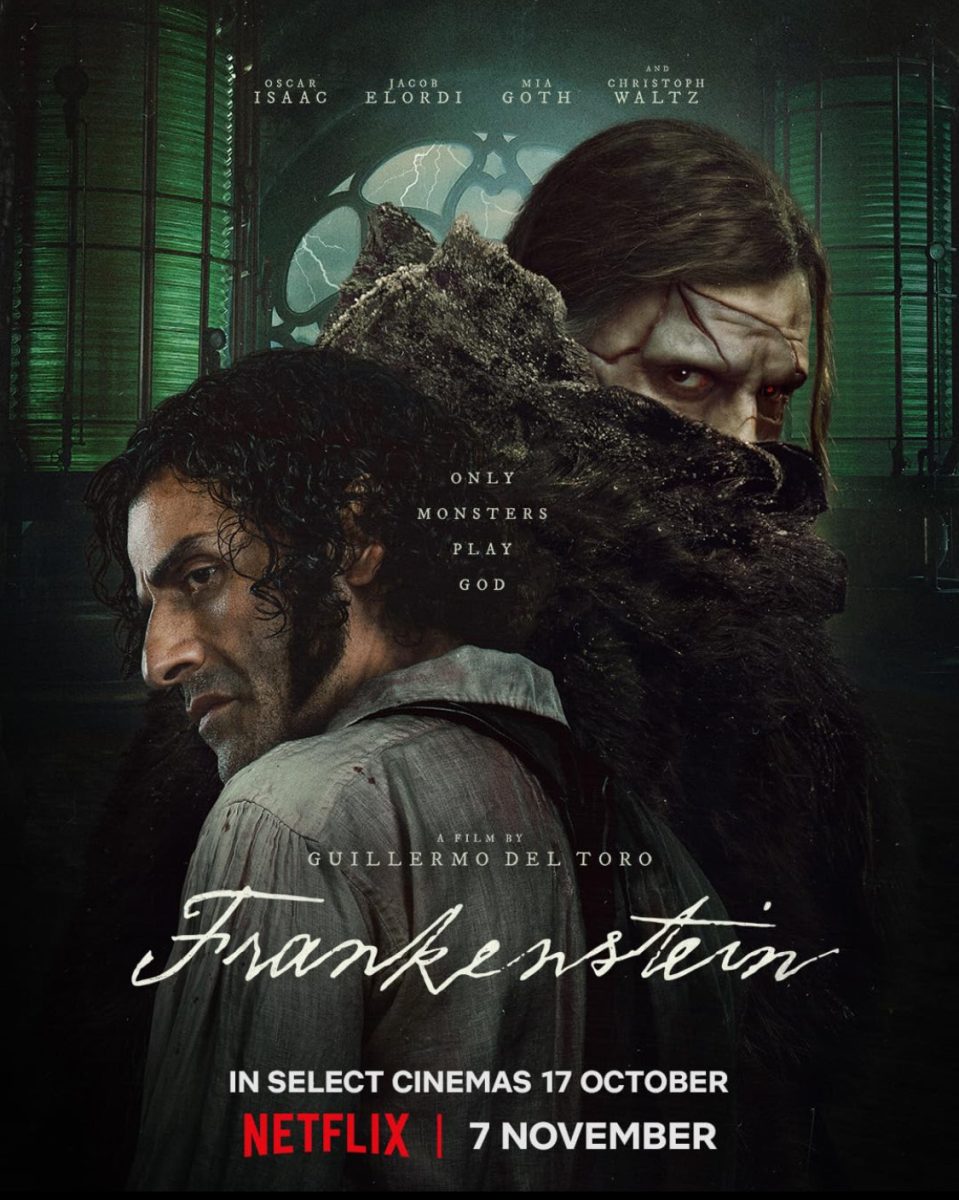


“Frankenstein”, written and directed by Guillermo del Toro, is a gothic science fiction film based on the 1818 novel by Mary Shelly. Released as a Netflix film with a limited theatre release, the cast is astonishing; featuring Jacob Elordi, Mia Goth, Oscar Isaac and many more. Victor Frankenstein, an intelligent scientist but fanatical over death, determined to conquer death, creates a creature and brings it to life. This movie does a great job of demonstrating creation, purpose, abandonment and forgiveness.
Frankenstein, who is played by Isaac, a child of emotional abandonment and abuse by his father, was intrigued by death because of his mother’s death. Thus making him want to conquer death by creating a creature made of different dead bodies. Isaac played a huge part in the movie; his acting felt raw and real. His chemistry with Elordi was incredible, and it felt like they were 1000% dedicated to their characters. Elordi, who is the “Creature”, steps into the best version of Frankenstein created. Elordis’ makeup alone took 11 hours and involved 42 prosthetics, but gave him time to really step into the character. Completely stepping into the role of an almost childlike creature, new to everything around him yet treated so horribly, made me feel deeply for his pain. Frankenstein creates a beautiful creature with empathy, love, and understanding, just for him to want it dead. Del Toro does a phenomenal job of implementing creation and degradation. When Frankenstein creates his creature, and it doesn’t do as he says, he completely disregards it, just as his father did when he was younger, creating a cycle of emotional neglect.
The Creature then hopes to understand himself and the world around him. From when he was created up to the point of the hunters attempting to kill him, all he has been shown is pain and hate. The special effects and film team do amazing with a few more gnarly scenes, such as the blood and killings, which make the film feel more real. When he found a family, he remained unknown and still helped them, showing that despite his monster-like appearance, he wasn’t. It showed that a “monster” could be more human than the people around him. The old man who lived in the cottage taught the creature how to read, understand, find his creator and forgive. All the Creature longed for was a family, belonging, and love, which correlates with what everyone needs.
When the Creature finds his creator, Frankenstein, he demands a companion to fill his loneliness. Frankenstein once again shows he’s more monster than his creation by denying him. The chase between the Creator and Frankenstein in the Arctic emphasised the loneliness and darkness with the lightning and cold setting. The classical but gothic music incorporated with violins and certain instruments contributed to the film’s setting. The film’s ending cinematography was beautiful, with the Creature alone, staring into the distance.